



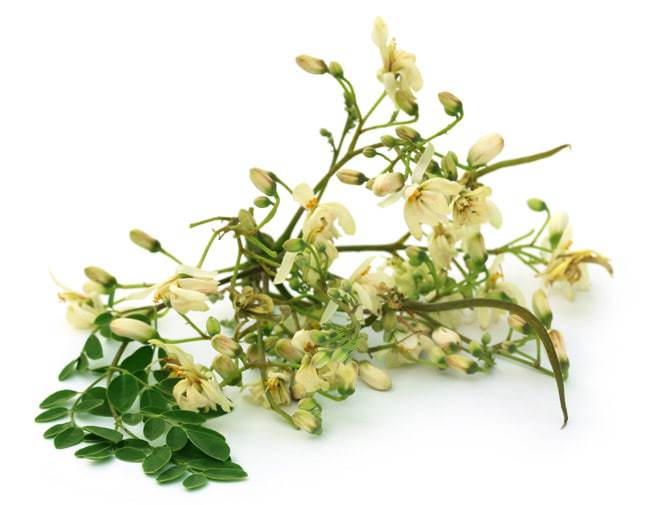
Grown in sub-Himalayan Asia and some areas of Africa, Moringa is a flowering plant that has been used as an edible and medicinal plant for many generations due to its high concentrations of Vitamin A, Vitamin B, Vitamin C, and minerals such as calcium and potassium.
There are 13 plants that form the Moringaceae family of which the Moringa is a member In this article we’re going to look at how a Moringa leaf supplement many be beneficial to your long-term health and wellbeing, and how it may also help to boost your energy levels in your day-to-day life. Moringa leaf is rich in antioxidants such as zeatin, quercetin, beta-sitosterol, caffeoylquinic acid, and kaempferol[2]. You may recognize quercetin as this is the phenol associated with red wine, grapes, and red onions. Quercetin provides potent antioxidant and immune boosting effects, helping to offset illness while also playing a potential role in the prevention of cancer in the long term. A study published in the Public Library of Science in April, 2014 set out to explore the potential anticancer properties of Moringa leaf extract with highly promising results[3]. The researchers concluded with the following statement: “The MOL extract was tested for cytotoxic effects against normal cells by using MTT analysis. The analysis showed the considerable toxicity associated with the soluble MOL extract in the cancer cell line, A549 (∼65% for 200 µg/mL). At the same concentration, the viability of the normal cell line (i.e., COS-7) exposed to the MOL extract showed minor cytotoxicity, demonstrating that normal cells are more resistant to the extract than cancer cells. While MOL evoked death of all the A549 cells above 300 µg/mL MOL, normal COS-7 cells showed a gradual decrease in cell viability, with over 50% survival seen even at 600 µg/mL MOL. In conclusion, MOL is highly specific against cancer cells.” These results are very interesting because they show that Moringa leaf extract is preferentially toxic to cancer cells, while at the same time leaving normal healthy cells relatively unscathed. In July, 2014 a study was published in the Journal of Phytochemistry which demonstrated that the isothiocyanates from Moringa Oleifera leaves provide in vitro benefits against inflammation[4]. The following concluding statement was published: “Specifically, both [isothiocyanates] attenuated expression of iNOS and IL-1β and production of nitric oxide and TNFα at 1 and 5 μM. These results suggest a potential for stable and concentrated moringa isothiocyanates, delivered in MC as a food-grade product, to alleviate low-grade inflammation associated with chronic diseases.” This is fantastic news for sufferers of conditions such as arthritis and rheumatism because a simple Moringa leaf supplement could provide ongoing daily relief from the chronic pain associated with such ailments. General thyroid health and concentrations of thyroid hormone play an instrumental role in obesity and various metabolic conditions, so aiding the body in more effectively regulating its levels of hormones such as triiodothyronine and thyroxine could be hugely beneficial in the context of weight loss. There was some quite promising data published in the Official Journal of Italia Pharmacological Research Society in 2000[5]. The results from this study were fairly conclusive, suggesting that lower concentrations of Moringa leaf extract could prove beneficial in the treatment of hyperthyroidism. Furthermore, the extract proved to be more effective in females than in males, making it a great choice for women who are suffering from hyperthyroidism and are looking for some kind of herbal supplement to assist in its treatment. It is important to note that at this moment in time there are no medically approved dosing protocols for Moringa leaf extract. With this in mind you are advised to take into consideration factors such as your age, current or previous medical conditions, and any prescription medications that you may be presently taking. Most of the human studies surrounding Moringa leaf extract have used doses ranging from 500mg to 3 grams, so we recommend starting with 500mg daily and increasing the dosage if necessary. Please note that while there may be some benefits gained from Moringa leaf supplementation after pregnancy in the form of increased milk production, it is recommended that pregnant women do not use Moringa leaf due to its potential abortive effects. What’s more, this is a potent supplement so we advise that you do not assume that more is always better. The doses mentioned above may have potential long-term benefits in the prevention of health ailments, but using extremely high doses can illicit genotoxicity. This does not necessarily need to be a cause for concern, however, because your supplement will typically come with its own usage instructions, and combining that with what we have discussed above regarding dosage means that you have all the information you need to get the very best from your Moringa leaf supplement. A 2012 study published in the Journal of Ethnopharmacology established the safety of water soluble extracts of Moringa leaf[6], stating: “Results obtained in this study suggest that the aqueous leaf extract of Moringa oleifera is relatively safe when administered orally.” With applications in the field of cancer prevention, inflammation, thyroid health, and even enhanced milk production in nursing women, Moringa leaf extract is definitely one supplement that you will want to look out for if you’re looking for long-term health benefits. [1] http://www.explorelifeonearth.org/moringahome.html [2] http://www.ncbi.nlm.nih.gov/pubmed/17089328 [3] http://www.ncbi.nlm.nih.gov/pmc/articles/PMC3991666/ [4] http://www.ncbi.nlm.nih.gov/pubmed/24731259 [5] http://www.ncbi.nlm.nih.gov/pubmed/10675284 [6] http://www.ncbi.nlm.nih.gov/pubmed/22138517 Photo credit copyright @ bdspn74 depositphotosThe Benefits of Moringa Leaf in Capsule / Extract Format
Cancer Prevention?
Anti-inflammatory Effects
Thyroid Health
How Much Moringa Leaf Extract Should I Take?
Potential Side Effects: Is Moringa Leaf Safe to Use?
Conclusion






Leave A Comment