



In this guide we will look at the importance of Omega fatty acid ratios, and how much EPA and DHA you really need to optimise your Omega 3 levels.
Did you know that a recent research study conducted at Harvard University found that Omega 3 fatty acid deficiency is one of the top 10 causes of death in the USA? It ranked number 8 out of 12 lifestyle and dietary metabolic risk factors, above high trans fat intake, alcohol consumption, and low intake of fruits and vegetables!
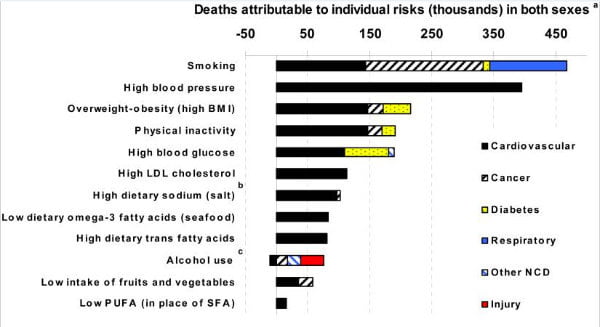
The good news is these deaths are considered preventable yet the problem is many are not aware of any deficiencies until its too late.
What are the signs You may be deficient?
Early warning signs may include excessive thirst, frequent urination, dry hair and skin, sleep problems, attention problems, sub optimal memory and emotional sensitivity such as depression or anxiety.
But a deficiency is also associated with high inflammation, a “silent” health problem which only surface at a later stage through cardiovascular problems, and auto-immune diseases.
For a definitive answer and to monitor your progress you can take regular blood tests to check for any deficiencies.
Wait…Don’t I already get Omega 3’s in my diet?
Because of our modern diet, the problem is not so much a lack of fatty acids, but an imbalance of Omega 3 to Omega 6 fatty acid ratios.
Seed and vegetable oils rich in Omega 6 fatty acids are found everywhere, and because of their relatively low price they are used in most modern industrial food processes.
The key is to seek a ratio of around 1:1 or 2:1 of Omega 3 to Omega 6 fatty acids in your diet, but many people eat a ratio of as much as 1:30, or even 1:50… And this is just the start of the problem…
Your Omega 3 intake and the ratio to Omega 6 also depends on the quality of the foods you consume!
For example lets look at a how Omega 6 to Omega 3 ratios differ when you compare the typical farmed / grain fed meats or fish you find in the stores, to more expensive grass fed / wild caught alternatives (the lower the better):
Standard grain fed beef (over 20:1) vs Grass fed beef (3:1)
Standard grain fed chicken (around 20:1) vs Naturally fed free range chicken (3:1)
Supermarket eggs (20:1) vs Naturally fed free range eggs (1.5:1)
Farmed salmon (1:3) vs wild Alaskan salmon (1:10)
How much Omega 3 Do You need?
Whilst there is no set recommended standard dose of omega-3 fats, some health organisations recommend a daily dose of 250 to 500 milligrams (mg) of EPA and DHA for healthy adults.
But certain health conditions also indicate an increased need for omega-3 fats. For instance:
Cardiovascular health: The American Heart Association recommends those with coronary heart disease to consume 1,000 mg of EPA and DHA daily while those with high triglycerides may need 2,000 to 3,000 mg per day[1].
Research also shows people who took 850 mg of EPA and DHA daily for 3.5 years had a 25 percent lower risk of heart attack and a 45 percent lower risk of sudden death.[2]
Anxiety and depression: Higher doses of omega-3, from 200 mg to 2,500 mg daily, has been shown in studies to have an effect on symptoms of depression and anxiety.[3]
Cognition and Memory: In one study, elderly volunteers suffering from memory deficits saw improvement after taking 900 mg of DHA per day for 24 weeks, compared with placebo controls.[4]
Another study saw improvement in verbal fluency scores after 800 mg of DHA per day for four months compared with placebo.[5]
Pain and stiffness: A study found that 300 mg of krill oil per day had an effect on inflammation, pain, stiffness and functional impairment after just 7 days, and even more profoundly after 14 days.[6]
Warning – Not all Omega 3’s are the same
Now before you run to purchase an Omega 3 supplement there are a few important factors you need to consider:
If you’re not a fan of fishy burps, Krill Oil could be a better option especially as it has better absorption in the body so you need a much smaller quantity of EPA and DHA per capsule, which also results in a smaller easier to swallow pill.
For more information about the most effective fish oil supplements you can check out our in depth report here.
How to get the Optimal Krill Oil dosage
When selecting your Krill oil supplement look for 500mg Pure Krill Oil (Euphausia Superba) capsules.
To get a dosage as close to the studies we recommend a minimum per capsule of:
Omega 3 phospholipids 200 mg
Eicosapentaenoic Acid (EPA) 50 mg
Docosahexaenoic Acid (DHA) 22.5 mg
Astaxanthin 40mcg
Remember that because of the higher bioavailability of Krill Oil, you need a much lower amount of EPA and DHA compared to standard fish oils.
In particular, the optimal krill oil supplementation dosage will vary based on your objectives:
Personal results will vary, but these provide a good baseline to consider.
If you are looking for a potent Krill oil supplement, then look no further than Better Nutrition Labs own Antarctic Krill Oil, which features 60X 500mg Pure Superba Krill Oil (Euphausia Superba) capsules per bottle.

How else can you increase your Omega 3 fatty acids ratio?
Whilst Krill Oil and Fish Oils are practical insurance policies to ensure an optimal Omega 3 levels we highly recommend supplementing through a wide range of natural food sources.
Here are our favourite go-to list of the top omega-3 foods to add to your diet:
Alaskan Salmon (wild-caught)
Mackerel
Herring
Sardines
Anchovies
Whilst not as beneficial as fish and Krill, you can also get Omega 3 fatty acids from Flaxseed, chia seeds, hemp seeds and Walnuts.
Your body and brain deserves the best so don’t compromise when it comes to this key nutrient!


Leave A Comment