




Running has always historically been associated with weight loss. And it must be true that if you train a few times a week diligently, manage to run your first half marathon, and graduate to finishing a full marathon then you’ll be losing weight in the process right?
The reality though might surprise and disappoint you…
The runners paradox
Running is a fantastic activity, which can provide a wide range of health benefits including:
- Burning calories, up to 865 calories an hour!
- Improving your mental health by helping your body release mood enhancing endorphins, as well as release built up stress and promote peace of mind.
- Strengthening your respiratory system including lungs and bronchi which can lessen the effects of asthma.
- Providing your arteries with a good workout which promote healthy blood pressure and heart health.
- Boosting your immune system by promoting deep cleansing breath.
- Building physical health, especially in the lower body, tendons and ligaments. These help promote improved joint strength and mobility, and can help reduce the chance of ankle, hip and knee injuries.
- Increasing bone density by making your body release key minerals when stressed to your bones.
But thats not all, running can also help promote healthy blood sugar levels, and build confidence as well as will power.
This all sounds great but there is a problem…
Many first time marathon runners find that after training and running a few marathons they are either at the same weight or have actually gained weight!
A recent study from the Institute of Lifestyle Medicine, a nonprofit research center founded by Harvard Medical School and the Spaulding Rehabilitation Hospital found that:
Only 11% of runners for a charity marathon had lost weight
11% had gained weight (sadly not linked to increased muscle mass)
78% stayed the same
This study mirrors the findings of an older study published in the International Journal of Sports Medicine
A survey of 2000 fitness fans echoed similar findings[2]:
54% of people completing their first race had gained weight
The same results applied to first time half marathon and 10k runners
This outcome is puzzling, and has pushed researchers and fitness professionals to try and figure out why this weight loss failure rate is so high.
The importance of the little details
Sports research has found that the problem is not that running is not a good workout, but that there are key details which make the difference between reaching your weight loss goal or falling short:
The elusive sweet spot & our terrible estimation efforts
Our bodies get stronger in direct response to the amount of stress it is subjected to. In running terms, you want to run at a pace which increases your heart rate, and challenges your body.
A great analogy I often remind myself of is that water only boils when it reaches 100’c / 212’ Fahrenheit. Just a degree less, and nothing happens! So unless you reach the sweet spot which provides enough of a challenge, the magic doesn’t happen.
The problem is that we are really bad at estimating effort, and this can result in many running a lot slower than they are capable of.
This was demonstrated by a team of Canadian scientist which found that participants in its study were good at estimating an easy running pace, but were found to be at less than 75% of their heart rate capacity when asked to perform at a vigorous pace.
Yes crossing the finish line is a great achievement, but if you want results you have to hit the magic sweet spot.
Calories in vs Calories out
The next big factor which contributes to runners not losing weight is their diet, and more importantly what happens to this diet after training.
After a long run you are very likely to come back really hungry, and very likely to feel like you can have a reward because you burned all those calories.
The problem is that we are once again really bad at estimating our calorie needs post workout, which results in over loading with carbs.
An interesting study published by Cornell University found that participants told to take a two km exercise walk consumed 124% more M&Ms compared to those who were told to take a scenic walk. In other words, the idea that they had “worked out” prompted more snacking as they had burned the calories before.
The key takeaway here is to plan your post workout meals carefully, and reframe your workout as a fun diversion rather than a chore that has to be endured.
Picking the right tools for the best results
As mentioned before running provides a great workout, with a wide range of health benefits. But if you’re running with a focus on weight loss, running may not be the most optimal tool for the job.
Instead you are much more likely to get better results by implementing resistance / weight training rather than focusing only on running. Contrary to popular belief, this applies both to men and women.
Take advantage of the after burn effect
- Studies have demonstrated that your metabolism can be boosted up to 36h after a weight training workout
Build your fat burning furnace
- Weight training develops muscle mass, which is correlated with more effective metabolic rates. The more muscle you have the more efficiently you burn during exercise.
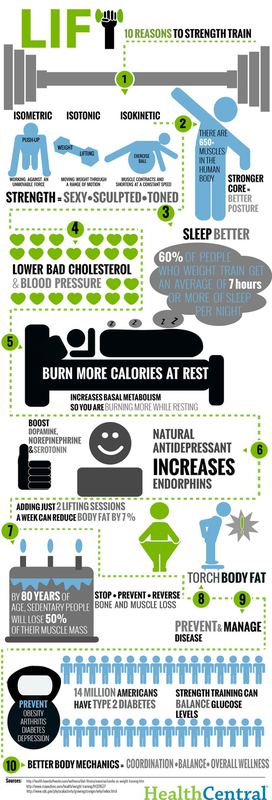
But thats not all, strength training brings many further benefits to the table including:
- Improved posture
- Stronger core muscles
- Improved sleep
- Blood pressure and cholesterol benefits
- Lower risks of disease
As well as better body mechanics which benefit day to day activities. Check out the infographic below for some more interesting highlights:
Need a little extra help?
At Better Nutrition Labs we are strong proponents of healthy living principles as the foundation to great health, with nutrition and exercise as key pillars to reaching optimal results.
And if you need some extra help reaching your weight loss goals, here are our current favourite weight loss supplements to get the edge:
Need help with cravings or appetite control? 5-HTP is 100% natural and has been found to boost the body’s natural serotonin production which can help you feel fuller for longer.
Need to supercharge your metabolism? Garcinia Complex combines the benefits of Garcinia Cambogia, with Green Coffee (45% GCA), Green Tea, Guarana, and Capsicum for optimal fat burning results.
Feeling bloated or constipated? Try a detox supplement such as CoreFlush for 30 days to reset your system.





Leave A Comment