



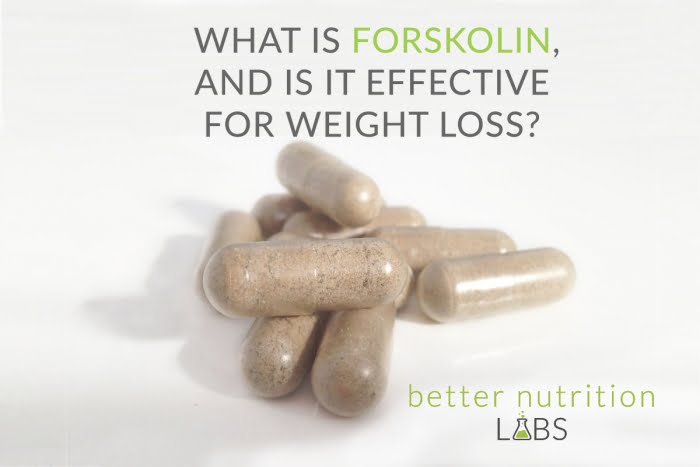
You may have heard of Forskolin in the media recently, as it has been featured in a wide range of publications for its weight loss properties. Dr Oz even included it in its “best belly busting supplements” list, for its thermogenic properties.
In our report you’ll find out how this new substance works, if its safe to consume, and most importantly we’ll review its effectiveness as a weight loss aid.
What is Forskolin and What Does it Do?
 Coleus forskohlii, also known as plectranthus barbatus[1] or Indian Coleus, is a tropical plant which is closely related to the coleus species.
Coleus forskohlii is of particular interest to us because of its potential as a weight loss aid and antioxidant.
Forskolin, also known as coleonol, is a compound which occurs naturally in Coleus forskohlii and has been used in the study of cell physiology to activate the enzyme adenylyl cyclase, as well as increasing the intracellular levels of cyclic AMP, or cAMP[2].
cAMP plays an important role in cell signaling, as well as directly impacting the way cells respond to various hormonal stimuli, affecting hypothalamic and pituitary function.
What this basically means is that Forskolin helps cells communicate with one another, greatly increasing hormonal function and essentially telling the body to produce more of an enzyme known as hormone sensitive lipase[3].
In English, Please?
If you’ve ever heard the word “lipid” then you can probably guess that hormone sensitive lipase has something to do with the fat in our bodies, which is exactly right!
It also appears as if the upregulation, or increase in production of cAMP has a knock-on effect, resulting in an increased production of thyroid hormone which, again, helps to stimulate the metabolism and cause great fat burning.
This might all sound a little complicated but all we need to know at this point is that Forskolin causes the body to produce more lipolytic, or fat-burning enzymes, as well as more fat-burning hormones[4].
While this all sounds like great news for those of us that are trying to lose weight, let’s dig a little deeper to see if this actually translates into increased weight loss in the real world.
Forskolin and Weight Loss
Weight Loss In Men
The first study we’re going to look at was published in the Journal of Obesity Research in 2005, and set out to determine the body composition and hormonal adaptations associated with forskolin consumption in overweight and obese men[5].
This randomized, double-blind, placebo-controlled study took place over a 12-week period and involved 30 subjects, with a dosage of 250 mg of 10% Forskolin extract twice a day.
The resulting data from this study looks very promising, with subjects exhibiting the following:
A “significant decrease” in body fat percentage and overall fat mass
A “significant increase” in lean body mass; coupled with
A change in bone mass, suggesting an increase in bone density
A “significant increase” in free testosterone levels
All of this points to Forkolin being not just a pure fat loss supplement but also a natural way for men to boost their testosterone levels, which in turn will result in less body fat and more lean muscle mass.
The research group concluded with the following statement: “The results indicate that forskolin is a possible therapeutic agent for the management and treatment of obesity.”
Weight Loss in Women
The research on the effects of Forskolin in women is even more interesting, beginning with one study published in the Journal of the International Society of Sports Nutrition in 2005[6].
Although “no significant differences” were seen in the fat mass of the subjects, it is very interesting to note that the Forskolin actually seemed to “mitigate gains in body mass,” suggesting that adherence to a sensible diet and exercise plan could be enough to tip the scales, so to speak, in a more favorable direction.
Some subjects also reported a reduction in fatigue and hunger, so this could have significant implications for people who are on low-calorie diets.
What’s more, the researchers reported that “No clinically significant interactions were seen in metabolic markers, blood lipids, muscle and liver enzymes, electrolytes, red cells, white cells, hormones (insulin, TSH, T3, and T4), heart rate, blood pressure, or weekly reports of side effects.”
Showing the Forskolin appears to be free of any adverse side effects, making it a safe weight loss and weight management aid for the general population.
Topical Forskolin for Spot Reduction
Many people suffer from what is commonly known as stubborn fat. In men this typically is found on the lower abdominal and “love handle” regions, with the hips and thighs being of particular notoriety in women.
Body fat spot reduction has long been dismissed by many as a myth, but a series of trials assessed in the Journal of Obesity Research in 1995 used a series of topical ointments containing Forskolin.
The researchers concluded that, “All trials […] gave significantly more girth loss from the treated thigh. We conclude that topical fat reduction for women’s thighs can be achieved without diet or exercise.”
Potential Side Effects
One animal study[7] involving mice did observe a difference in the Cytochrome P450 system[8], which plays a role in the absorption and metabolism of various types of medication, including but not limited to blood thinners such as Warfarin[9].
For this reason, it would be wise to consult your doctor before taking a Forskolin supplement if you are taking any relevant medications.
Other than this we could find no side effects relating to Forskolin, and similar findings were found in a study published in the Journal of the International Society of Sports Nutrition in 2005 showing that Forskolin appears to be free of any adverse side effects.
Conclusion: Should you take Forskolin?
Forskolin appears to show a great deal of promise in the areas of fat loss and the reduction of fat gain, while also being almost entirely free of potential side effects.
This makes it a wholly safe and effective supplement to add to your fat loss arsenal, so be sure to check it out.
Our Forskolin supplement features 250mg of 100% pure Coleus Forskohlii, standardised to 20% Forskolin, the same dosage as used in the studies for best results.


Leave A Comment